Generational Blanket
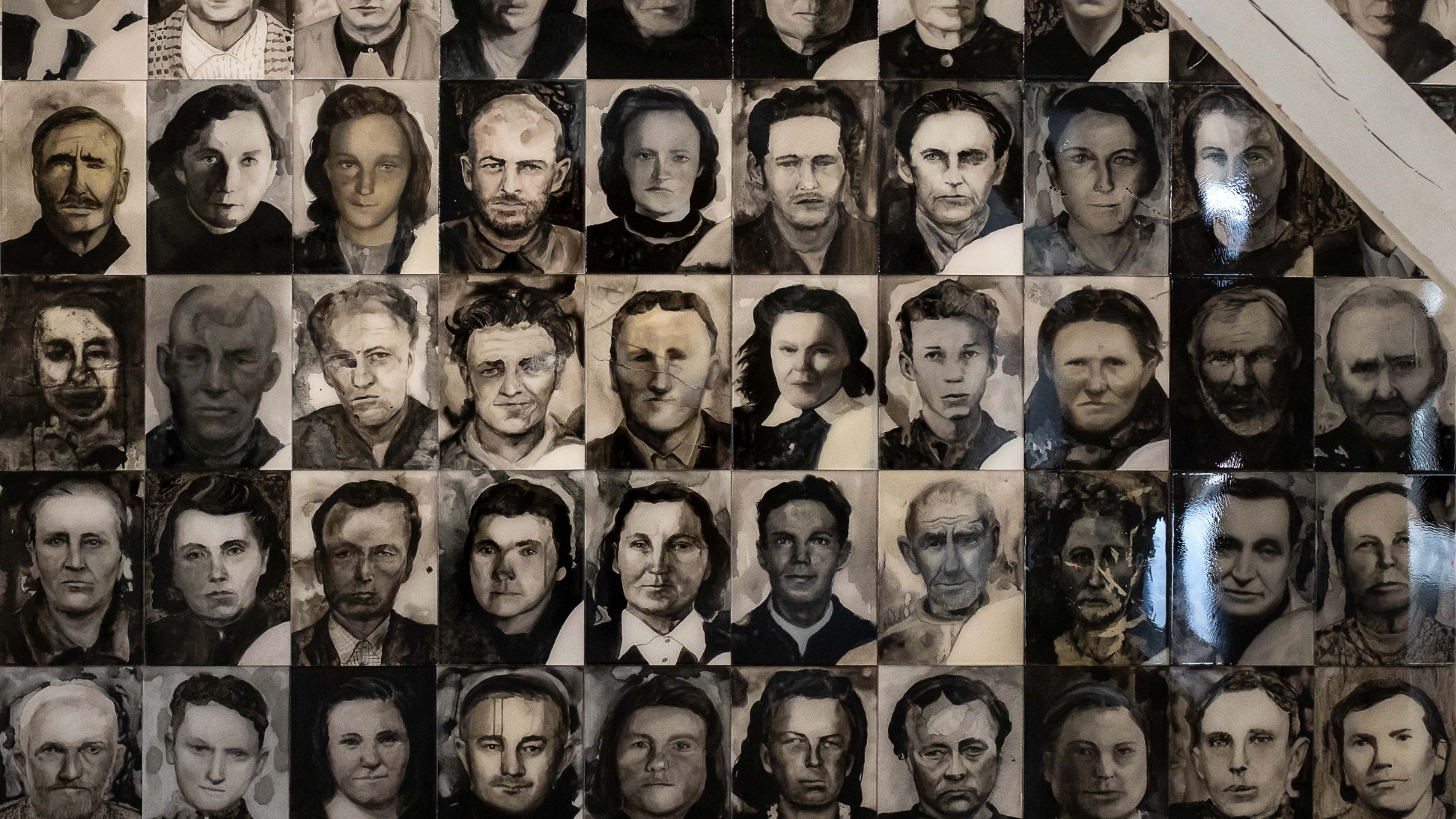
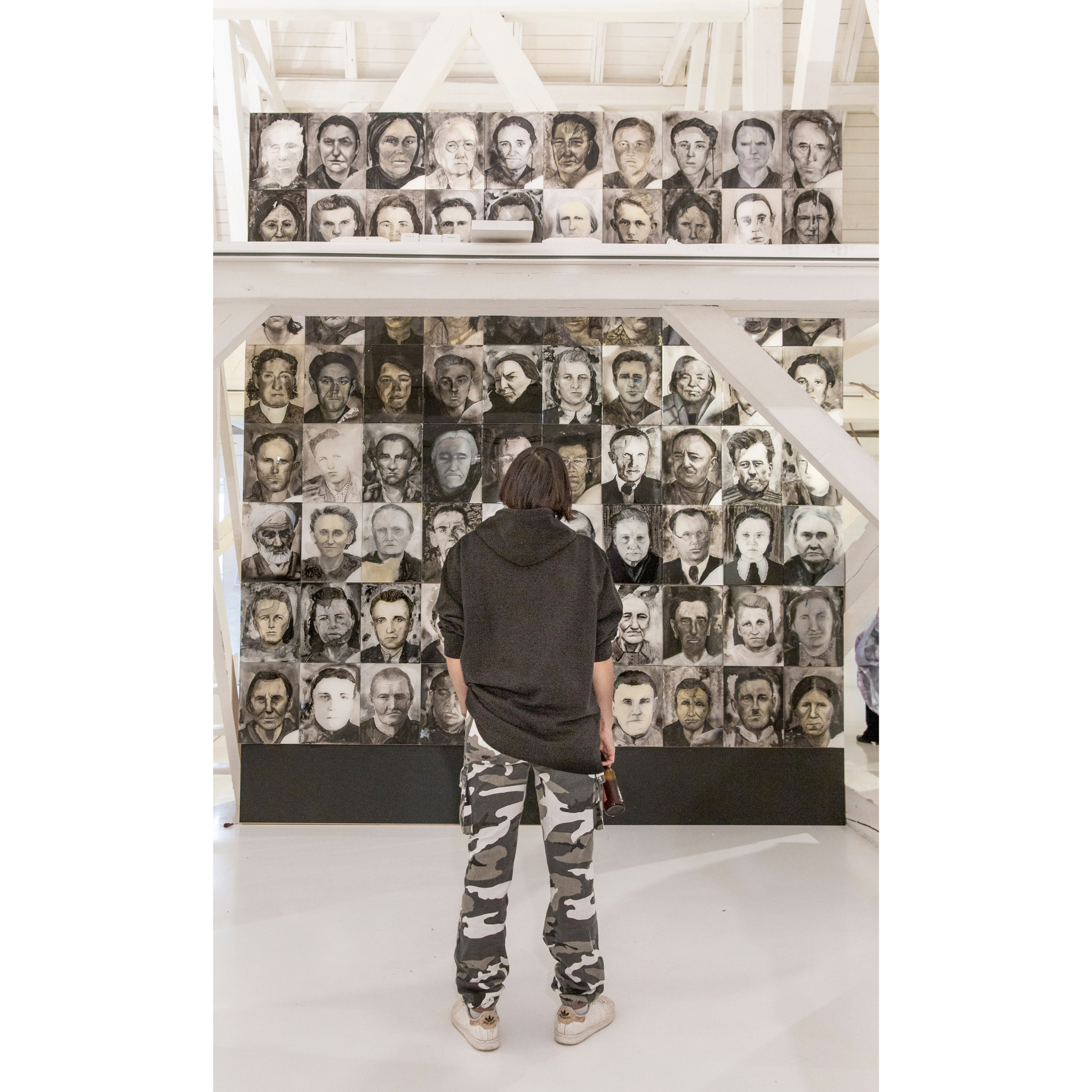
“Generational Blanket” consists of more than 160 portraits inspired by the deportation case files of repressed individuals, which I studied at the Latvian State Archives. Over the course of three years, I visited the archive and examined the deportation files of more than 200 people. In many of these cases, there were no photographs of the individuals, or the photos had fallen out. The found images were small, approximately 2 × 3 cm, often damaged. Some were stained with ink; in one case, the entire document folder had been soaked in water, leaving only an imprint of the photograph on the opposite page.
The first files I examined were those connected to my own family — my grandmother, her brother, her cousin’s family, and later the man my great-grandmother met in Siberia. Afterwards, I selected people who had taken part in interviews, shown interest in their ancestors’ stories, or had been my great-grandmother’s neighbors, or deported to the same region as she was.
Through these files, I observed the diversity of human responses. Some seemed to have accepted their fate, while others tried to resist — repeatedly petitioning for clemency or attempting to prove the injustice of their deportation. In some cases, mock investigations were carried out; documents were sent stating that a person was not a “kulak,” since their farm was very small, or that their political convictions were “red,” as they had saved a group of Soviet paratroopers. Someone had reviewed all this, drawing red pencil lines under the most “important” sentences.
The reflective epoxy surface is an essential part of the work, as the main theme is not the past or history itself, but the present — how a contemporary person looks back on the unknown fates of others. It serves as a reference to collective memory and to a society whose identity remains deeply entwined with the trauma embedded in its culture.